



Image Source: pexels
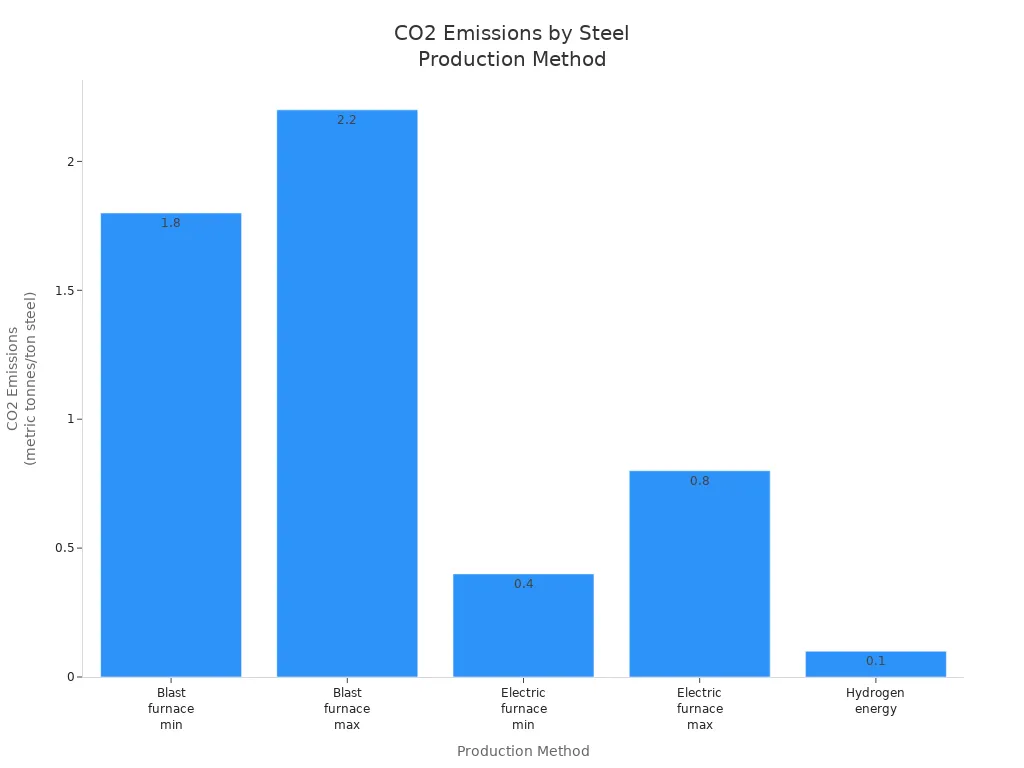
Did you know the steel industry produces about 3 billion tonnes of CO2 every year? This equals 9% of global carbon emissions. You can see how different production methods impact the environment:
Metric | Value |
|---|---|
Total CO2 emissions from steel industry | 3 billion tonnes per year |
Percentage of global emissions | 9% |
CO2 emissions per ton of steel (average) | 1.89 metric tonnes (2020) |
CO2 emissions using blast furnaces | 1.8 to 2.2 metric tonnes |
CO2 emissions using electric furnaces | 0.4 to 0.8 metric tonnes |
CO2 emissions using hydrogen energy | 0.1 metric tonnes |
You play a key role in shaping a cleaner future. Eco-Friendly Manufacturing is more than a trend. Jinlisheng leads this movement with color coated aluminum, steel, and stainless steel products. The company focuses on quality and innovation to cut emissions and boost sustainability. When you choose sustainable solutions, you gain a business edge and help protect the planet.
Key Takeaways
The steel industry contributes 9% of global carbon emissions. Choosing eco-friendly manufacturing helps reduce this impact.
Adopting low-carbon technologies, like hydrogen-based steelmaking, can significantly lower emissions and support sustainability.
Recycling steel not only conserves resources but also reduces CO2 emissions. Aim for products with high recycled content.
Integrating renewable energy in steel production can cut greenhouse gas emissions by up to 63%. Support manufacturers who prioritize this.
Digital tools can optimize your carbon footprint. Use tracking systems to monitor emissions and improve sustainability practices.
Environmental Impact in Color Coated Steel

Emissions and Waste Sources
You play a vital role in understanding how color coated steel production affects the environment. The process uses large amounts of energy and raw materials. This leads to significant greenhouse gas emissions and waste. When you look at the main sources, you see that energy use, coating processes, and waste from steel scraps all contribute to the environmental footprint.
You can see how new technologies help reduce emissions and waste in the table below:
Technology | Description | Impact on Emissions/Waste |
|---|---|---|
Energy Efficiency | Waste Heat Recovery captures exhaust gases to lower energy use. | Cuts emissions by 20-25%. |
Material Efficiency | Biochar Blending replaces coke with biochar. | Cuts emissions by up to 20%. |
Circularity | Scrap Steel Use reduces energy and water demand. | Cuts energy by 15% and water by 40%. |
Jinlisheng recognizes these challenges and invests in advanced production lines and strict quality control. You benefit from products that meet high standards while supporting a cleaner environment.
Industry Challenges and Opportunities
You face several challenges in the color coated steel industry.
High energy consumption and greenhouse gas emissions remain major concerns.
Buildings account for 40% of the EU's final energy use and 35% of greenhouse gas emissions, showing the impact of construction materials.
The industry must shift toward a circular economy. Steel’s recyclability gives you a chance to reduce environmental harm.
You also see many opportunities. The demand for sustainable construction grows every year. Color coated steel fits well with green building standards because it is durable and recyclable. When you choose manufacturers who invest in low-emission coating processes, you gain a competitive edge. Eco-Friendly Manufacturing helps you meet market trends and support a healthier planet.
Eco-Friendly Manufacturing Strategies

Low-Carbon Technologies in Color Coated Steel
You can make a big difference in reducing emissions by choosing advanced low-carbon technologies in steel production. Many leading manufacturers now use methods that cut carbon output and support Eco-Friendly Manufacturing. Here are some of the most effective technologies you will find in the industry:
Lower carbon and circular reductants
Direct and indirect use of hydrogen
Electrification
Plasma injection
Oxyfuel injection
Digitalisation
Hydrogen-based steelmaking stands out as a game changer. When you compare it to traditional methods, you see a dramatic drop in carbon emissions. The table below shows the difference:
Method | Carbon Emissions | Byproduct |
|---|---|---|
Traditional Steelmaking | High (due to coke use) | CO2 |
Hydrogen-based Steelmaking | Significantly lower | Water vapor |
You can see how this shift leads to cleaner air and a healthier environment. Companies like ArcelorMittal have already started using Direct Reduced Iron (DRI) and Electric Arc Furnace (EAF) technologies. Their hydrogen-powered DRI units aim to cut emissions by up to 50%. You benefit from these innovations when you choose products from manufacturers who invest in such solutions.
Jinlisheng leads the way in Eco-Friendly Manufacturing by adopting advanced production lines and strict quality control. Products like the Printed galvanized coil use high-quality, recyclable steel and efficient coating processes. This approach reduces emissions and supports your sustainability goals.
Resource Efficiency and Recycling for Sustainable Steel
You can help the environment by focusing on resource efficiency and recycling in color coated steel production. Best practices include:
Regular employee training to keep recycling practices top of mind and reward departments that excel in sorting.
Building partnerships with recycling companies to maximize scrap value and ensure efficient collection.
Investing in on-site processing equipment like balers and shredders to reduce material volume and improve efficiency.
Using tracking and analysis systems to monitor scrap collection and identify areas for improvement.
When you recycle steel, you lower CO2 emissions and conserve natural resources. Recycling also reduces landfill waste and supports a circular economy. You play a key role in this process by choosing products made with recycled content.
Jinlisheng’s PE Coated PPGI and Printed PPGL products are excellent examples. These products use recyclable steel and efficient coatings, which help you reduce waste and support Eco-Friendly Manufacturing in your projects.
Tip: When you select steel products with high recycled content, you support a closed-loop system that benefits both your business and the planet.
Renewable Energy Integration in Steel Production
You can further reduce your carbon footprint by supporting the integration of renewable energy in steel manufacturing. Green steel production uses renewable energy sources and low-carbon technologies. This shift cuts greenhouse gas emissions compared to traditional fossil fuel-based methods.
Electric arc furnace (EAF) technology, when powered by renewable energy, can reduce greenhouse gas emissions intensity by 63% compared to the industry average. When you factor in renewable energy credits and carbon offset credits, you help the industry move closer to net zero emissions.
Jinlisheng continues to invest in renewable energy and efficient production methods. By choosing Jinlisheng’s HDP Coated PPGI and PVDF Coated PPGI, you support Eco-Friendly Manufacturing and help drive the industry toward a more sustainable future.
Note: Every step you take toward renewable energy and recycling in steel production brings you closer to meeting global sustainability goals.
Sustainable Supply Chains and Digital Solutions
Green Sourcing and Logistics
You can build a sustainable supply chain by focusing on green sourcing and logistics. Jinlisheng uses several strategies to reduce environmental impact and support Eco-Friendly Manufacturing:
Adopt clean technologies such as hydrogen-based production and carbon capture to lower emissions.
Increase production of sustainable steel to meet market demand for low-carbon materials.
Improve ESG performance by tracking environmental, social, and governance metrics.
Embrace digitization to optimize logistics and enhance sustainability reporting.
Collaborate with stakeholders, including customers, to drive effective sustainability initiatives.
You benefit from green logistics through reduced waste, lower energy consumption, and minimized pollution. Jinlisheng optimizes supply routes and uses local sourcing when possible. Steel transported within China produces less CO2 than imported steel, and supply routes can result in emissions of less than 10kg CO2 per tonne. Over 90% of residue material is recycled or reused, which boosts resource efficiency. The by-products, such as blast furnace slag, are valuable for other industries and help sequester atmospheric CO2.
Tip: Choosing Jinlisheng’s Printed galvanized coil ensures you receive steel with traceable origins and optimized logistics. The product page image is optimized with alt text: "Printed galvanized coil for sustainable steel supply chain".
Digital Monitoring and Optimization
You can monitor and optimize your carbon footprint using advanced digital tools. Jinlisheng integrates AI-powered carbon emission tracking, Continuous Emission Monitoring Systems (CEMS), and machine learning models to analyze emission patterns. These tools provide real-time data and help identify opportunities for improvement.
Strategy | Measurable Outcome |
|---|---|
Establish a baseline for emissions (Scope 1–3) | |
Optimize current operations | Reduce scrap by up to 15% through improved scheduling |
Shift to low-carbon production pathways | Implement hydrogen-based DRI to cut CO₂ emissions |
De-risk the transition | Use digital continuity for compliance-ready reporting |
Product traceability gives you transparency about the origin and production process of steel. You can track the journey from raw material sourcing to finished product. This transparency supports responsible sourcing and helps you meet regulatory requirements. Jinlisheng collaborates with customers to link sustainability metrics, such as carbon footprint and water usage, to each product. You can explore traceable products like PE Coated PPGI and HDP Coated PPGI for your projects. Each product page features optimized images with alt tags for traceability and sustainability.
Note: Product traceability and digital monitoring help you identify environmental hotspots and make stronger claims about your sustainability efforts.
You can lead the way in eco-friendly manufacturing by using these strategies:
Transition to low-carbon steelmaking technologies.
Increase scrap steel recycling.
Use renewable energy sources.
Optimize energy efficiency.
Develop sustainable supply chain practices.
When you adopt these methods, you gain cost savings, market access, and a stronger reputation. Jinlisheng remains committed to sustainability and innovation. Join us in building a greener future—Contact Jinlisheng or explore our products today!
FAQ
What is eco-friendly manufacturing in color coated steel?
Eco-friendly manufacturing uses processes and materials that lower emissions and waste. You help the planet by choosing steel made with renewable energy, recycled content, and advanced coating methods.
How does Jinlisheng control its carbon footprint?
You benefit from Jinlisheng’s strict quality control, energy-efficient production, and use of recyclable materials. The company tracks emissions and invests in green technologies to reduce its carbon footprint.
Which Jinlisheng products support sustainable building?
You can choose products like PE Coated PPGI, HDP Coated PPGI, and Printed galvanized coil. These products use recyclable steel and efficient coatings, making them ideal for green construction.
Why is product traceability important for sustainability?
Product traceability lets you track steel from raw material to finished product. This ensures responsible sourcing, supports regulatory compliance, and helps you meet your sustainability goals.
How can you reduce your project’s environmental impact?
Tip: Select steel with high recycled content, use digital monitoring tools, and partner with suppliers like Jinlisheng. These steps help you lower emissions and support eco-friendly manufacturing.