



You see Nano Coating Technology at work when a thin layer of nanoparticles forms a strong shield on metal surfaces. This shield blocks moisture, chemicals, and air, which stops rust and extends the life of steel. Many industries trust this technology because it delivers real results:
The global nano coating market hit $9.2 billion in 2024, with over half used for metals.
Anticorrosive nanocoatings are expected to protect 56.7% of industrial surfaces by 2026.
Jinlisheng leads the way in coated sheet materials, giving you reliable, innovative protection for modern projects.
Key Takeaways
Nano Coating Technology creates a protective layer on metal surfaces, blocking moisture and chemicals to prevent rust.
Industries benefit from nano coatings through improved durability, reduced maintenance costs, and enhanced product lifespan.
Choosing the right application method and coating type is crucial for maximizing the effectiveness of nano coatings.
Innovations like self-healing and smart coatings are shaping the future of anti-corrosion technology, offering even greater protection.
Jinlisheng's products demonstrate long-lasting performance, making them ideal for construction, automotive, and appliance industries.
What Is Nano Coating Technology
Definition and Features
Nano Coating Technology uses extremely small particles to create a protective shield on surfaces. When you apply this technology, the nanoparticles bond with the material at a molecular level. This process does more than just cover the surface. It actually changes how the surface behaves. The result is a durable, invisible layer that protects against water, oil, dirt, and chemicals.
You can find Nano Coating Technology in many industries because it offers a range of benefits:
Water-repellent (hydrophobic) effect
Oil-repellent (oleophobic) effect
Self-cleaning surfaces
Thermal insulation and conductivity
Abrasion resistance
Chemical and corrosion resistance
Antimicrobial resistance
UV resistance
You can apply these coatings using different methods. Some common techniques include layer-by-layer assembly, dip coating, sol-gel, plasma spray, and chemical vapor deposition. Each method helps the nanoparticles stick to the surface in a strong and even way.
Unique Nanoscale Properties
The power of Nano Coating Technology comes from the size of the particles. Nanoparticles are much smaller than a human hair. This tiny size lets them fill in microscopic gaps and create a smooth, even barrier. You get better protection because the coating covers every part of the surface, even places you cannot see.
Scientific studies show that adding treated nanoparticles like SiO2 or ZnO to coatings can make steel much more resistant to corrosion. For example, coatings with up to 4% SiO2 nanoparticles give steel better protection. If you use too much, the particles can clump together and reduce the effect. Compared to traditional coatings, nanocomposite coatings perform better because they have special nanoscale domains that boost their protective power.
You can see why industries choose Nano Coating Technology for advanced protection and long-lasting results.
Principles of Nano Coating Technology

Image Source: unsplash
Surface Modification
You can think of surface modification as the foundation of Nano Coating Technology. This process changes the outermost layer of a material to improve its properties. When you use surface modification, you help the coating bond tightly to the metal, making it more durable and effective against corrosion.
Some of the main techniques you might see include:
Chemical Vapor Deposition (CVD)
Physical Vapor Deposition (PVD)
Spray Coating
Sol-Gel Process
Electrodeposition
Laser Cladding
Each method creates a unique surface structure. For example, the sol-gel process forms a thin, glass-like layer, while electrodeposition builds up a metal coating with nanoscale features. These advanced methods give you a coating with refined morphology and multifunctionality. As a result, you get much better performance than with traditional coatings. The nanoscale domains in these coatings provide more effective protection and open up new possibilities for different applications.
Note: Studies show that nanocomposite coatings made with these techniques deliver superior corrosion resistance and longer-lasting protection compared to older methods.
Hydrophobic and Barrier Effects
One of the most impressive features of Nano Coating Technology is its ability to make surfaces hydrophobic. This means water, oil, and dirt have a hard time sticking to the coated surface. You see this effect in many real-world situations:
Vehicle exteriors and windshields become easier to clean and safer to use, with up to 30% better visibility during rain.
Electronics coated with nano layers can survive water immersion for up to 30 minutes.
Buildings and infrastructure need cleaning half as often, and the coatings help prevent rust and decay.
Outdoor gear dries faster and resists stains, making it more appealing to users.
Ships and boats use less fuel because the coatings prevent marine growth, cutting fuel use by 10-15%.
These hydrophobic and barrier effects work together to block moisture, salts, and chemicals from reaching the metal underneath. You get a surface that stays cleaner, lasts longer, and needs less maintenance.
Corrosion Prevention Mechanisms
Nano Coating Technology protects metals through several powerful mechanisms. First, the nanostructured layers act as a physical barrier, stopping water and oxygen from reaching the metal. Second, the special arrangement of nanoparticles creates complex pathways that slow down the movement of corrosive ions.
Researchers have found that adding materials like chitosan and zinc oxide to coatings can greatly reduce corrosion on steel. The more layers you add, the better the protection. When you use functionalized nanomaterials such as carbon nanotubes or graphene, you boost the coating’s durability and resistance to harsh environments. These nanomaterials have a high surface-to-volume ratio, which makes them even more effective at blocking corrosion.
In laboratory tests, coatings with silicon dioxide nanoparticles showed much higher corrosion resistance, especially when the concentration stayed below 4%. If you use too much, the particles can clump together and lose their effect. Another study showed that a nanocomposite coating of chitosan and graphene oxide on carbon steel increased corrosion resistance by 100 times in salty water. This improvement comes from the coating’s ability to repel water and slow down the movement of ions.
Scientists agree that the structure and composition of nanocoatings play a key role in their anti-corrosion performance. These coatings not only protect against rust but also reduce friction and wear, making them valuable for many industries.
You can see that Nano Coating Technology stands out for its advanced protection, especially in tough environments where traditional coatings often fail.
Types of Nano Coatings in Jinlisheng Products
Patterned and Non-Patterned Series
You can choose from both patterned and non-patterned series in Jinlisheng’s product lineup. The Patterned Series uses advanced printing and coating methods to create high-definition designs like wood grain or marble. These products do more than look good. The nano coatings form a strong barrier that keeps out water, chemicals, and dirt. This helps prevent rust and fading, even when you use them outdoors. The non-patterned galvanized coil gives you a smooth, shiny finish. It uses a zinc-rich nano layer that protects steel from corrosion. You get a product that lasts longer and needs less maintenance.
Tip: Patterned and non-patterned products both offer strong anti-corrosion performance and let you match your project’s style.
Galvanized and Aluminum-Zinc Coatings
Jinlisheng’s galvanized and aluminum-zinc coatings use Nano Coating Technology to give you extra protection. The hot-dipped galvanized steel covers the surface with a zinc layer. This layer acts as a shield, stopping moisture and air from reaching the metal. You can use these sheets for roofs, walls, and even car parts. The hot-dipped aluminum-zinc steel adds aluminum and silicon to the mix. This combination gives you even better resistance to rust and heat. You get a lightweight material that works well in tough environments, such as coastal areas or factories.
SMP, PE, and PVDF Coatings
You can find several types of color coatings in Jinlisheng’s products. SMP (Silicone Modified Polyester), PE (Polyester), and PVDF (Polyvinylidene Fluoride) coatings each offer unique strengths. SMP coatings give you good weather resistance and color stability. PE coatings provide a bright finish and are easy to shape. PVDF coatings stand out for their long-lasting color and top-level protection against UV rays and chemicals. These coatings use nano particles to create a tight, even layer. This layer keeps your steel or aluminum looking new and strong for years. You can use these coated sheets for everything from airport warehouses to high-rise buildings.
Note: By choosing the right coating, you make sure your project stays beautiful and protected, no matter the environment.
Real-World Performance and Applications
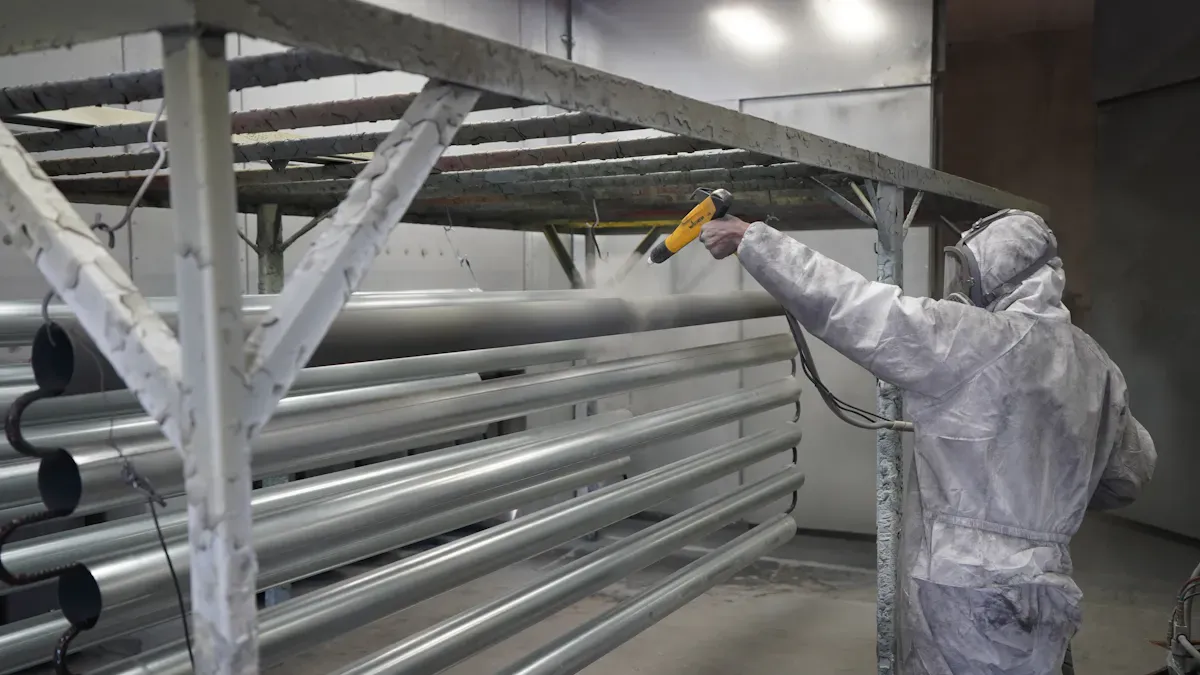
Image Source: pexels
Industry Case Studies
You see the impact of advanced anti-corrosion coatings every day in the world around you. In the construction industry, builders use Jinlisheng’s Patterned Series and Hot-dipped Galvanized Steel for roofing and wall panels. These products protect buildings from rain, humidity, and pollution. You can find them on airport warehouses, stadium stands, and high-rise exteriors. The nano coatings help these structures resist rust for over a decade, even in harsh weather.
In the automotive industry, manufacturers choose Hot-dipped Galvanized Steel and Aluminum-Zinc Steel for car shells and parts. These materials keep vehicles safe from corrosion, especially in coastal cities where salt can damage metal. You get longer-lasting cars that need fewer repairs.
Home appliance makers rely on Printed PPGL and Non-patterned Galvanized Coil for refrigerator back panels, washing machine shells, and file cabinets. These coatings prevent rust and keep appliances looking new for years. You benefit from products that stay strong and attractive, even with daily use.
Tip: When you choose Jinlisheng’s coated steel, you invest in materials that stand up to tough environments and reduce maintenance costs.

Image Source: colored-steelcoil
Jinlisheng Product Effectiveness
You want proof that these coatings work. Let’s look at the numbers. Jinlisheng’s nano-coated steel sheets offer outdoor durability of 10–15 years, even in humid or coastal regions. For example, the Patterned Series uses a zinc layer of 30–120g/m², which blocks moisture and chemicals. This means you get less rust and longer service life.
In real projects, builders report that Jinlisheng’s SMP Coated PPGI keeps its color and shine for over 15 years on airport warehouse walls. You see fewer repairs and lower costs. In the appliance industry, manufacturers say that using Non-patterned Galvanized Coil reduces rust-related failures by up to 40%. This means you get appliances that last longer and look better.
Jinlisheng’s PVDF Coated PPGI stands out in high-rise buildings and stadiums. The nano coating resists UV rays and pollution, so the exterior stays bright and clean. You save money on cleaning and repainting. Customers value these benefits because they get reliable performance and long-term savings.
You see how Nano Coating Technology delivers real value. You get materials that last longer, look better, and save you money over time.
Note: For more details on Jinlisheng’s anti-corrosion solutions, visit the official product page.
Factors Influencing Effectiveness and Future Trends
Environmental and Application Factors
You need to consider several factors when you use nano coating technology in real-world projects. The environment plays a big role in how well these industrial coatings perform. Nano coatings help materials resist UV radiation, water, and dirt. They also support sustainability because low-VOC products reduce harmful emissions.
Other important factors include the type of substrate and the way you apply the coating. The table below shows how these parameters affect performance:
Tip: Always match the coating type and application method to your project’s needs for the best anti-corrosion results.
Advantages and Limitations
Nano coating technology gives you many advantages. You get superior protection, water repellency, and UV resistance. These coatings last longer and reduce maintenance costs. Over time, you save money because you do not need to recoat as often.
However, you may face some challenges. High initial costs and the need for standardization can slow adoption. Handling nanomaterials requires care to avoid environmental risks. Some coatings need better durability and stability for tough industrial applications.
Nano coatings extend product life and reduce waste.
Low or zero VOC options help protect the environment.
You must consider possible nanoparticle release during use or disposal.
Innovations in Nano Coating Technology
You see exciting trends shaping the future of anti-corrosion coatings. Self-healing coatings use microcapsules or special bonds to repair scratches and cracks on their own. This feature keeps your Jinlisheng coated steel protected, even in harsh environments. Smart coatings can sense changes and adjust their properties, making maintenance easier.
Self-healing coatings respond to damage without outside help.
These innovations reduce downtime and lower maintenance costs.
The global market for anti-corrosion nanocoatings is growing fast, driven by demand for durable, eco-friendly solutions.
Note: As you look ahead, expect more intelligent and sustainable nano coating options for industrial and construction projects.
You have seen how nano coating technology creates a powerful shield that protects metal from rust and damage. This technology delivers proven anti-corrosion performance in real-world industries. Experts predict that anti-corrosion coatings will lead the market, covering over half of industrial surfaces by 2025. Jinlisheng stands out as a leader in innovative coated sheet solutions, offering products that combine durability, style, and long-term value.
Industry forecasts show exciting advancements ahead:
You can expect nano coatings to become even more resistant to wear, UV rays, and extreme temperatures. As technology evolves, you will see smarter, more sustainable industrial coatings that protect your assets better than ever. Choose Jinlisheng for your next project and experience the future of anti-corrosion protection. Contact us today to explore our full range of coated sheet solutions.
FAQ
What is nano coating technology and how does it protect metal?
Nano coating technology uses tiny particles to form a protective layer on metal. You get a barrier that blocks water, oxygen, and chemicals. This helps prevent rust and extends the life of your steel or aluminum products.
How long do Jinlisheng’s anti-corrosion coatings last outdoors?
You can expect Jinlisheng’s anti-corrosion coatings to last 10–15 years outdoors. These coatings protect galvanized steel and aluminum-zinc steel from harsh weather, UV rays, and moisture, keeping your projects strong and looking new.
Can I use color coated steel for both indoor and outdoor applications?
Yes, you can use color coated steel for both indoor and outdoor projects. The nano coatings provide excellent corrosion resistance and color stability. You get reliable performance for roofs, walls, appliances, and decorative panels.
What industries benefit most from Jinlisheng’s nano coating technology?
You see the biggest benefits in construction, automotive, and appliance manufacturing. Nano coating technology helps protect building materials, car parts, and home appliances from corrosion, saving you money on repairs and replacements.
Are Jinlisheng’s coated sheet products customizable?
You can request custom coatings, colors, and finishes for your project. Jinlisheng offers flexible solutions for galvanized steel, aluminum-zinc steel, and patterned series. This ensures you get the right anti-corrosion coating for your needs.