


Image Source: pexels
You want safer, more cost-effective solutions in your chemical plant. Nano anti-corrosion steel for chemical plant use gives you that edge. This advanced material stands out because it resists harsh chemicals and lasts longer than traditional steel. Jinlisheng leads the way with innovation and quality in coated steel.
Nano-ceramic and hybrid nanocomposites offer exceptional hardness and chemical resistance.
Sustainability and lifecycle performance reduce waste and support your ESG goals.
Advancements in application technology improve efficiency and lower energy use.
The market for these coatings is growing rapidly, with a projected CAGR of 9.6% by 2030.
Key Takeaways
Nano anti-corrosion steel offers superior resistance to harsh chemicals, extending the lifespan of your equipment and reducing maintenance costs.
Upgrading to nano-coated steel can significantly lower the risk of leaks and failures, enhancing safety for your team and compliance with industry standards.
Investing in nano anti-corrosion steel may have a higher initial cost, but it leads to long-term savings through reduced downtime and fewer repairs.
Jinlisheng's advanced coatings are environmentally friendly, containing no toxic substances or VOCs, supporting a greener operation.
Regular inspections combined with nano anti-corrosion steel can further minimize unexpected failures, ensuring smooth plant operations.
What is nano anti-corrosion steel?
Image Source: pexels
Nano-coating technology overview
You may wonder what sets nano anti-corrosion steel for chemical plant environments apart from regular steel. The answer lies in its advanced nano-coating technology. This technology uses extremely small particles—measured in nanometers—to create a protective layer on the steel surface. These nano-coatings form a dense, uniform barrier that blocks moisture, chemicals, and other corrosive agents from reaching the steel underneath.
Recent advancements in nano-coating technology have made these materials even more effective.
Nanomaterials in polymer nanocomposite coatings improve barrier properties and reduce porosity.
Smart nanocoatings can respond to changes in the environment, such as pH or temperature, to boost their protective power.
Modern deposition techniques help create coatings that stick better and last longer.
Jinlisheng has become a leader in this field by developing and applying these cutting-edge technologies to its coated steel products. You benefit from their commitment to research and innovation, which ensures you get steel that stands up to the toughest chemical plant conditions.
Key properties and benefits
When you choose nano anti-corrosion steel, you gain several important advantages. The nano-coating provides exceptional resistance to acids, alkalis, and industrial chemicals. This means your equipment and structures last longer and require less maintenance. The coatings also offer high hardness and scratch resistance, so surfaces stay smooth and easy to clean.
You will notice that these materials help reduce the risk of leaks and failures, which improves safety for your team. The long-lasting protection also means you spend less on repairs and replacements over time. Jinlisheng’s expertise ensures you receive reliable, high-quality steel that supports your plant’s safety and efficiency goals.
Tip: Upgrading to nano anti-corrosion steel for chemical plant use can help you meet strict industry standards and improve your facility’s overall performance.
Performance of nano anti-corrosion steel for chemical plant
Chemical resistance and durability
You need materials that can handle the toughest chemical plant environments. Nano anti-corrosion steel for chemical plant applications gives you a clear advantage over traditional steel. The nano-coating forms a dense, protective barrier that blocks corrosive chemicals, moisture, and even extreme pH levels. This means your equipment and structures stay strong, even when exposed to acids, alkalis, and industrial solvents.
Jinlisheng’s Non-patterned galvanized steel sheet, Hot-dipped Aluminum Zinc Steel, and Patterned galvanized steel sheet all use advanced coatings to boost chemical resistance. These products perform well in harsh environments, including areas with high humidity or aggressive chemical exposure. For example, the Hot-dipped Aluminum Zinc Steel combines aluminum, zinc, and silicon in its coating, which increases its ability to resist corrosion from both acids and bases.
Recent research shows that nano anti-corrosion coatings outperform standard galvanized and aluminum-zinc coatings in long-term chemical exposure tests. You can see the difference in the table below:
Environment Class (ISO 9223) | Coating Type | 2-Year Avg. Corrosion Rate (μm/year) |
|---|---|---|
C2 (Low) | Hot-Dip Galvanized (HDG) | 0.8 – 1.5 |
Zn–Al–Mg Alloy | 0.5 – 0.9 | |
C4 (High) | Hot-Dip Galvanized (HDG) | 3.2 – 6.0 |
Zn–Al–Mg Alloy | 1.8 – 3.5 |
You can see that Zn–Al–Mg alloy coatings, which use nano-technology, have a much lower corrosion rate, especially in high-risk environments. This means your plant’s steel structures will last longer and require fewer repairs.
Jinlisheng’s Non-patterned galvanized steel sheet also benefits from this technology. The zinc coating protects against moisture and mild acids, making it ideal for chemical plants near coastal areas or with high humidity. The Patterned galvanized steel sheet adds extra safety with its anti-slip surface, while still providing strong corrosion resistance.
Note: Nano anti-corrosion coatings use nanoparticles like TiO2, SiO2, and ZnO to improve hardness, adhesion, and aging resistance. This makes the steel more durable and less likely to crack or peel, even after years of chemical exposure.
Maintenance and longevity
You want to keep your plant running smoothly with as little downtime as possible. Nano anti-corrosion steel for chemical plant use helps you achieve this by reducing maintenance needs and extending the lifespan of your equipment.
Here are some ways nano anti-corrosion steel makes maintenance easier:
The dense nano-coating reduces the need for frequent recoating or repairs.
You spend less time on surface preparation, since the coating resists flash rust and bonds tightly to the steel.
The steel is less likely to suffer from leaks or failures, which means fewer emergency shutdowns.
The coatings are inorganic and non-toxic, so you avoid exposure to hazardous materials during maintenance.
You can also use several strategies to further improve performance:
Choose the right material for each part of your plant.
Use cathodic or anodic protection to slow down corrosion.
Treat the medium to remove harmful chemicals or adjust pH.
Add corrosion inhibitors to the process.
Apply surface treatments like phosphating or oxidation for extra protection.
Design your systems with anti-corrosion in mind.
Nano anti-corrosion coatings also help the environment. They do not contain volatile organic compounds (VOCs) or toxic substances. You can return equipment to service faster because the coatings cure quickly and require fewer coats. The table below compares traditional coatings with nano anti-corrosion coatings:
Feature | Traditional Coatings | |
|---|---|---|
Coating Longevity | Requires frequent recoating | Designed to last significantly longer |
Surface Preparation | Extensive preparation needed | Simplified, less prone to flash rust |
VOCs and Toxicity | Often contains hazardous materials | Inorganic, non-toxic, no VOCs |
Downtime | Longer downtime for recoating | Quick return to service |
Project Completion Time | May take weeks for multiple coats | Shorter timeframe, minimal disruption |
Jinlisheng’s coated steel products, such as the Hot-dipped Aluminum Zinc Steel, help you save on maintenance costs and reduce environmental impact. You get reliable performance and long-term value, making them a smart investment for your chemical plant.
Tip: By choosing Jinlisheng’s advanced nano anti-corrosion steel, you protect your plant, save money, and support a safer, greener operation. Explore more about these products on the Jinlisheng website.
Safety and cost benefits
Reducing leaks and failures
You want your chemical plant to run safely every day. Nano anti-corrosion steel for chemical plant applications helps you reach this goal. The advanced nano-coating forms a strong barrier that blocks corrosive chemicals and moisture. This barrier reduces the risk of leaks, cracks, and structural failures. When you use Jinlisheng’s coated steel, you help protect your team and your equipment. Fewer leaks mean fewer accidents and less risk of environmental contamination. You also make it easier to meet strict safety and compliance standards.
Safety Tip: Regular inspections combined with nano anti-corrosion steel can further lower the risk of unexpected failures.
Lower maintenance and downtime
You know that frequent repairs and shutdowns can hurt your bottom line. Nano anti-corrosion steel for chemical plant use keeps your equipment in service longer. The nano-coating resists wear, scratches, and chemical attack. You spend less time and money on maintenance. Your team can focus on production instead of constant repairs. Jinlisheng’s products, like the Non-patterned galvanized steel sheet and Hot-dipped Aluminum Zinc Steel, offer reliable performance in harsh environments. This means you can plan maintenance on your schedule, not because of unexpected breakdowns.
Less frequent recoating
Fewer emergency shutdowns
Lower labor and material costs
Long-term ROI for chemical plants
You want your investments to pay off over time. Nano anti-corrosion steel for chemical plant applications delivers strong long-term value. The initial cost may be higher than standard steel, but you save money through reduced maintenance, fewer replacements, and less downtime. Jinlisheng’s commitment to quality and reliability ensures you get consistent results year after year. When you choose advanced coated steel, you protect your assets and improve your plant’s financial performance.
Benefit | Traditional Steel | Nano Anti-Corrosion Steel |
|---|---|---|
Maintenance Frequency | High | Low |
Downtime | Frequent | Rare |
Service Life | Shorter | Longer |
Compliance Risk | Higher | Lower |
Note: Investing in quality materials like Jinlisheng’s nano anti-corrosion steel supports both safety and savings for your chemical plant.
Real-world applications and Jinlisheng case studies
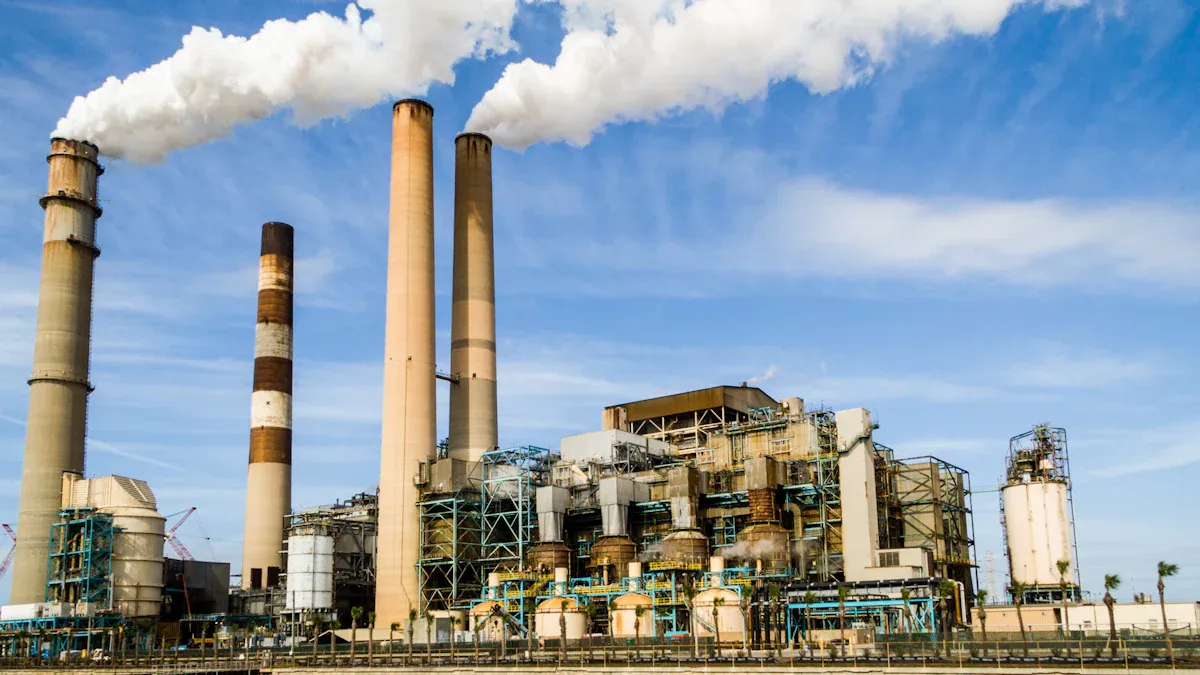
Image Source: pexels
Chemical plant success stories
You can see the impact of nano anti-corrosion steel for chemical plant operations in real-world settings. Many chemical plants have upgraded to Jinlisheng’s advanced coated steel products to solve persistent corrosion problems. For example, a large chemical facility in coastal China faced frequent equipment failures due to salt-laden air and aggressive chemicals. After switching to Jinlisheng’s Non-patterned galvanized steel sheet and Hot-dipped Aluminum Zinc Steel, the plant reported a dramatic drop in corrosion-related shutdowns.
Another plant specializing in fertilizer production needed a solution for high humidity and acidic vapors. By integrating Patterned galvanized steel sheet in walkways and storage areas, the plant improved worker safety and reduced slip incidents. These success stories show how you can use advanced materials to address both safety and operational challenges.
Product integration and outcomes
When you introduce nano anti-corrosion steel for chemical plant use, you may face some challenges. These include the complexity of corrosion systems and the need for high-performance surface modification. Nanotechnology applications are still developing, so you must select the right materials and protection methods. Jinlisheng helps you overcome these hurdles by offering a range of products and technical support.
You can see measurable benefits after integrating Jinlisheng’s coated steel:
Lower maintenance costs
Fewer emergency repairs
Longer equipment lifespan
Improved compliance with safety standards
Product | Application Area | Key Outcome |
|---|---|---|
Non-patterned galvanized steel | Piping, tanks | Reduced corrosion, fewer leaks |
Hot-dipped Aluminum Zinc Steel | Ducts, walls | Extended service life |
Patterned galvanized steel sheet | Walkways, platforms | Enhanced safety, durability |
Note: Jinlisheng’s technical team supports you with material selection, cathodic and anodic protection, and medium treatment. This ensures you get the best results from your investment.
You gain peace of mind knowing your plant runs safer and more efficiently with Jinlisheng’s nano anti-corrosion steel solutions.
You gain strong advantages when you choose nano anti-corrosion steel for your chemical plant. This material gives you enhanced corrosion resistance, improved adhesion, self-healing capabilities, and environmental friendliness. See the main benefits below:
Performance Benefit | Description |
|---|---|
Enhanced Corrosion Resistance | Nano-materials create a dense barrier that hinders moisture, oxygen, and corrosive chemicals. |
Improved Adhesion | Modifications to nano-materials promote stronger bonding with substrates, reducing delamination risk. |
Self-Healing Capabilities | Nano-materials can repair damage by releasing corrosion inhibitors when the coating is compromised. |
Environmental Friendliness | The use of nano-materials can lead to more sustainable and eco-friendly coatings. |
Jinlisheng’s advanced coated steel solutions help you boost safety, cut costs, and protect your assets. Explore Jinlisheng’s products today to secure reliable, innovative, and cost-effective anti-corrosion steel for your plant.
FAQ
What makes nano anti-corrosion steel better for chemical plants?
Nano anti-corrosion steel uses advanced coatings that block moisture and chemicals. You get longer-lasting protection and fewer leaks. Jinlisheng’s products help you meet strict safety standards and reduce maintenance.
Can you use Jinlisheng nano anti-corrosion steel in high-humidity areas?
Yes. You can use Jinlisheng’s nano anti-corrosion steel in coastal or humid environments. The dense nano-coating resists rust and corrosion, making it ideal for chemical plants near water or in damp conditions.
How does nano anti-corrosion steel lower maintenance costs?
You spend less on repairs because the nano-coating lasts longer and resists damage. Fewer recoating cycles and less downtime mean you save money over the life of your equipment.
Is Jinlisheng’s nano anti-corrosion steel environmentally friendly?
Yes. Jinlisheng’s nano anti-corrosion coatings do not contain toxic substances or VOCs. You support a greener operation and meet environmental regulations by choosing these advanced materials.
What support does Jinlisheng offer for product integration?
Jinlisheng provides technical support for material selection and application. You get expert advice to ensure the best performance and safety for your chemical plant.