



Image Source: pexels
You need key parameter control to achieve reliable results in press forming of color coated steel sheets. This control helps you prevent defects and maintain the integrity of the coating. Jinlisheng’s expertise in material selection and precision welding ensures you get durable, high-quality sheet metal products. Their advanced fabrication processes, seen in custom projects like grain bucket elevator frames and ultrasonic cleaning machine manufacturing, highlight their commitment to excellence. When you focus on advanced materials and thoughtful process design, you improve product quality, durability, and customer satisfaction.
Key Takeaways
Control key parameters like material thickness and coating to prevent defects in steel sheets.
Select the right steel material for your project to enhance strength and corrosion resistance.
Monitor coating thickness regularly to ensure durability and maintain the visual appeal of your products.
Use advanced tools and techniques to manage strain hardening and springback during fabrication.
Implement quality control measures at every stage to ensure your steel sheets meet specifications.
Key Parameter Control in Sheet Metal Fabrication
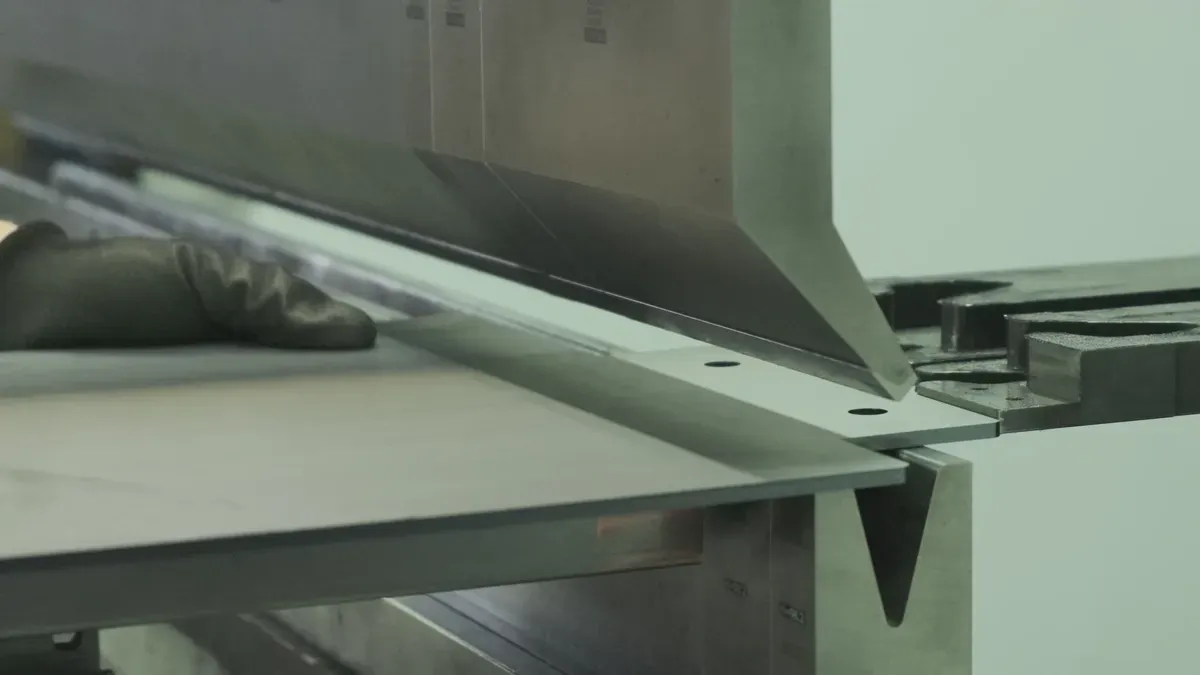
Image Source: pexels
Material Properties of Jinlisheng Steel Sheets
You need to understand the material properties of steel sheets before you start any sheet metal fabrication project. Jinlisheng offers a wide range of steel products, including non-patterned galvanized steel sheets, patterned galvanized coils, and printed galvanized steel sheets. Each material has unique properties that affect how you form, bend, and finish the sheet. The choice of material impacts the strength, ductility, and corrosion resistance of your final product.
Jinlisheng’s steel sheets come in various thicknesses and widths, giving you flexibility in design and fabrication. For example, the non-patterned galvanized steel sheet features a smooth surface and customizable spangle options. This makes it ideal for applications that require precise tolerances and a clean finish. You can explore more about this product here.
The patterned galvanized coil provides extra rigidity and slip resistance, which is essential for flooring and structural applications. The printed galvanized steel sheet adds aesthetic value with customizable patterns, making it suitable for visible surfaces in construction and furniture. You can view the patterned series here.
When you select the right steel material, you ensure that your sheet metal fabrication process meets both functional and visual requirements. Always check the material thickness range and mechanical properties before starting your design. This step helps you follow design guidelines and achieve the desired tolerances for sheet metal.
Tip: Use Jinlisheng’s technical support to match the right steel sheet to your application. This will help you avoid common fabrication issues and improve overall product quality.
Coating Thickness and Integrity
Coating thickness and integrity play a critical role in the performance of color coated steel sheets. You must control these parameters to protect the steel from corrosion and maintain its appearance. Jinlisheng uses advanced coating processes to ensure uniform thickness and strong adhesion. You can choose from zinc, aluminum-zinc-silicon, and organic coatings, each offering different properties for specific environments.
If you do not maintain adequate coating thickness, you may face several problems:
Poor adhesion can cause peeling, bubbling, or flaking of the coating.
These defects reduce the visual appeal and expose the steel to moisture and chemicals.
Corrosion can set in quickly, shortening the service life of your product.
Uneven thickness or improper curing can create internal stress and bonding issues.
You should always follow design guidelines for coating selection and application. Jinlisheng’s products, such as the printed galvanized steel sheet, offer customizable coating options to match your project needs. By monitoring coating properties and using precise application methods, you can achieve consistent results and meet strict tolerances.
Note: Regular inspection of coating thickness and properties of the coating ensures long-term durability and reduces maintenance costs.
Strain Hardening and Springback Management
Strain hardening and springback are two challenges you face during sheet metal fabrication. When you bend or form steel sheets, the material undergoes plastic deformation. If you do not control strain levels, you risk necking, tearing, or unwanted shape changes. Jinlisheng’s steel sheets are engineered for optimal formability, making them suitable for complex designs.
You can manage strain hardening and springback by:
Keeping strain below critical limits to prevent defects.
Using forming limit diagrams to identify safe deformation zones.
Applying simulation technology to predict springback before you build tools.
Using compensation techniques like over-bending or over-crowning to achieve accurate dimensions.
Ensuring proper blank placement, lubrication, and die alignment to control unbalanced forces.
Adding ribs or stiffeners to increase torsional stiffness and reduce unwanted movement.
Research shows that key parameter control, such as adjusting punch angle and blank thickness, can reduce springback. Lower punch angles increase springback, while thicker blanks and reduced clearance between punch and die decrease it. You should always follow bending design guidelines and design for manufacturability to minimize errors.
If you neglect these guidelines, you may encounter:
Costly rework due to incorrect dimensions and tolerances.
Delays in delivery and increased material waste.
Problems in subsequent fabrication steps like welding and assembly.
By following Jinlisheng’s design guidelines and using their high-quality steel materials, you can achieve precise tolerances for sheet metal and reliable performance in every project.
Remember: Consistent key parameter control in sheet metal fabrication leads to better product quality, lower costs, and higher customer satisfaction.
Process Design and Die Optimization
You need to focus on process design and die optimization to achieve the best results when forming color coated steel sheets. Jinlisheng’s versatile steel products, such as the patterned galvanized steel sheet, support a wide range of die designs and forming requirements. You can select the right material, coating, and thickness to match your project’s needs. This approach helps you minimize defects and protect the coating during every stage of sheet metal fabrication.
Die Radius and Punch Radius Selection
Die radius and punch radius selection play a key role in process design. You must choose the correct radius to prevent defects and maintain the integrity of the coating on the steel sheet. The table below shows how different defects relate to die radius choices:
Defect Type | Root Cause | Corrective Actions |
|---|---|---|
Outer-Side Cracking | Tensile strain on outer fibers exceeds material’s elongation limit. | Increase Radius (Preferred Solution): Switch to a wider V-die to naturally enlarge the inner radius. |
Orange Peel Effect | Excessive bend radius or coarse-grained material causes crystal slip. | Tighten the Radius: Minimize the radius as much as possible without inducing cracks. |
Angle Inconsistency | Variations in thickness and deflection compensation failure. | Thickness Grouping: Measure each sheet before production and group them within a ±0.05mm range. |
You also need to consider punch radius. The punch radius affects the surface roughness and wear depth on the coating. The chart below shows how punch radius and stamping hits influence the maximum roughness of the steel sheet:
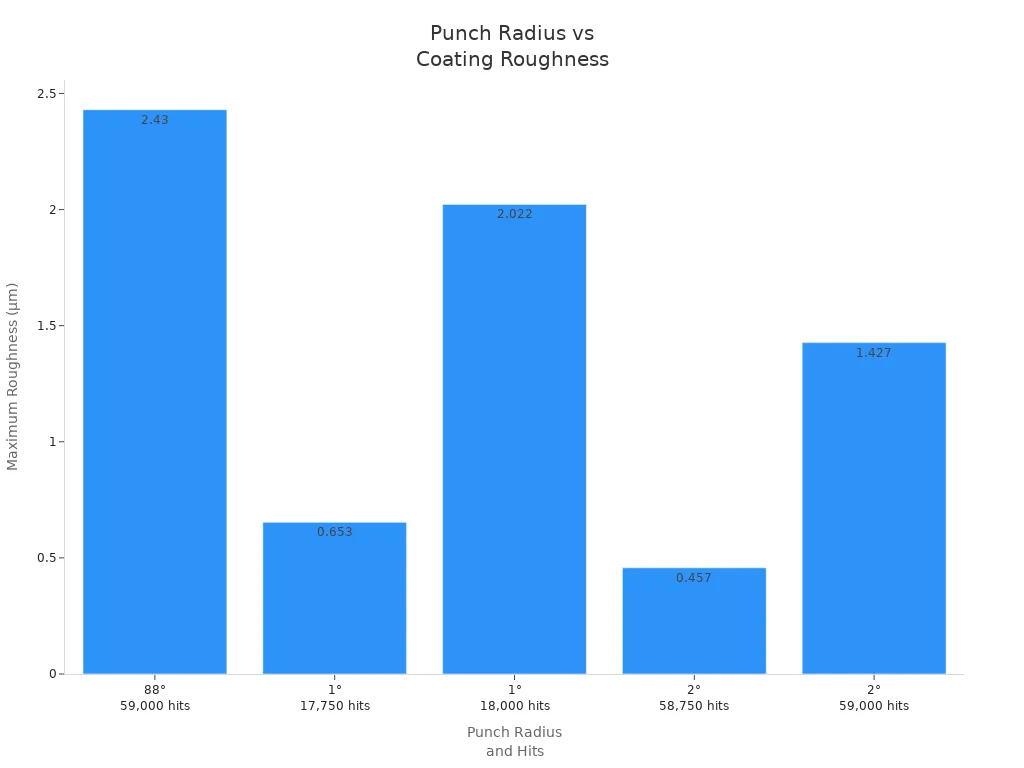
A larger punch radius reduces coating damage and extends tool life. Always match the die and punch radius to the material properties, thickness, and coating type for optimal results.
Tip: Use Jinlisheng’s printed galvanized steel sheet for applications that require both visual appeal and strong coating protection.
Blank Holder Force and Material Flow
You must control blank holder force to ensure proper material flow during steel sheet forming. Good process design prevents surface imperfections and structural issues. Here are best practices for blank holder force:
Optimize blank holder pressure to control material flow effectively.
Use draw beads or draw bars for extra restraining effects.
Consider the material’s yield stress and elongation to ensure proper extension.
If you do not control material flow, you may see scratches, dents, or dimensional inaccuracies on the coating. High-strength steel sheets are more likely to wrinkle or tear without proper flow control.
Temperature Control in Forming Zone
Temperature control in the forming zone is essential for maintaining the mechanical properties and coating performance of steel sheets. You must monitor heating parameters and heating temperature to avoid unwanted phase changes in the material. Proper heating improves grain structure, yield strength, and hardness. The table below shows recommended temperature ranges for different steel sheet forming processes:
Process Type | Temperature Range (°C) | Notes |
|---|---|---|
Deep Drawing | Up to 36 | Smaller surface pressures than embossing. |
Blanking of Steels | 50 to 600 | Varies significantly based on parameters. |
Blanking of S355MC | Up to 250 | Observed for 4 mm thickness; higher for 6 mm. |
Embossing | Up to 264 | Measured for 4 mm carbon steel; significant influence of parameters. |
General Blanking | Up to 1000 | Maximum temperatures observed during various processes. |
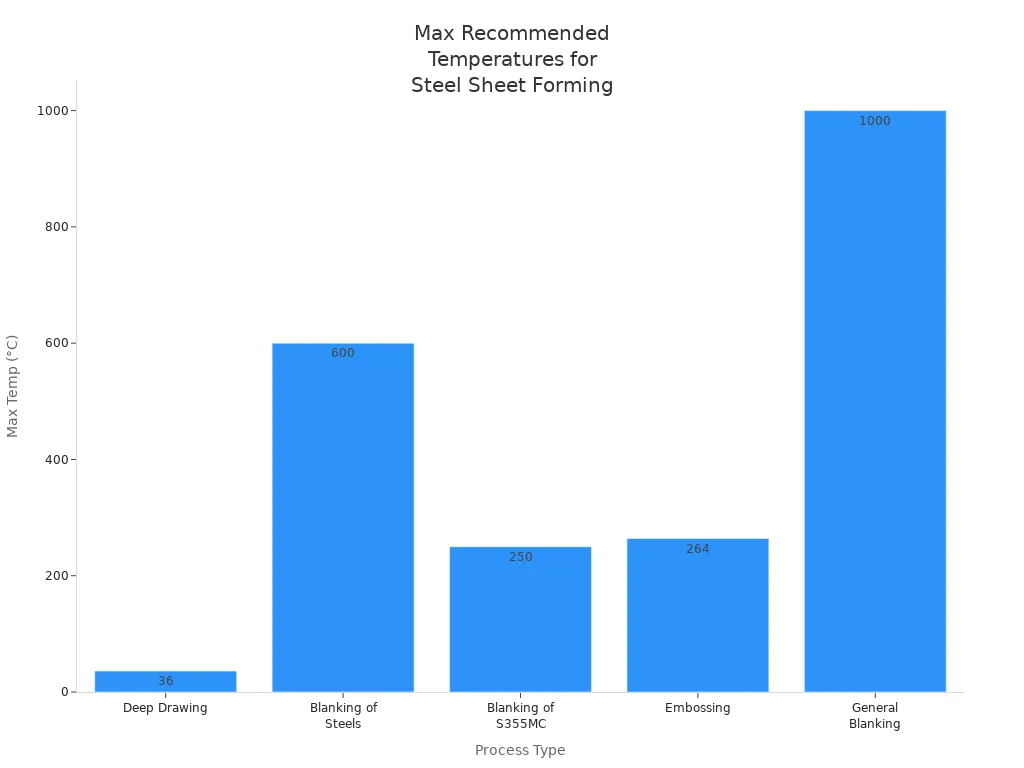
You should always adjust heating parameters based on the steel sheet’s thickness, coating, and material properties. This practice ensures the coating remains intact and the steel maintains its strength after bending or forming.
Note: Review your process design with your steel supplier and set clear acceptance criteria for edge quality and coating protection.
By focusing on process design, die optimization, and temperature control, you can achieve high-quality results with Jinlisheng’s steel sheets. You will reduce defects, protect the coating, and extend the life of your finished products.
Quality Assurance and Common Challenges
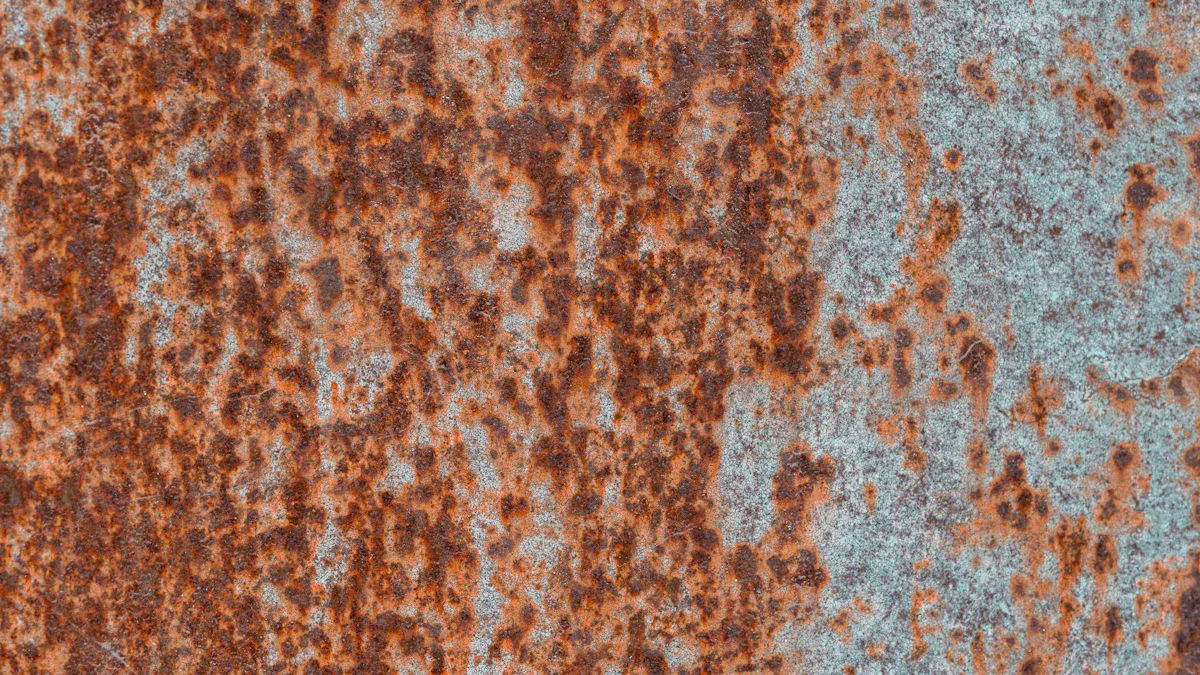
Image Source: unsplash
Monitoring and Adjusting Parameters
You need to monitor and adjust key parameter control throughout the press forming process to ensure consistent results. Advanced CAD and CAM tools help you create accurate models and reduce errors in your design. Automation in quality control processes allows you to track production parameters in real time. Specialized software integrates with these systems to maintain quality standards and make quick adjustments. Data analytics and reporting tools help you spot trends and predict issues before they affect your steel sheet. IoT devices collect real-time data from machines, letting you monitor performance and keep your material within specification.
Real-time parameter adjustment improves the consistency of your steel sheet. Intelligent devices and machine networking allow you to make rapid changes during production. This approach reduces downtime and keeps your product quality stable. You can use real-time angle measurement systems, laser-based bending angle detection, and robotic loading to streamline operations. Automated bending sequence optimization and feedback systems help you adjust bending angles on the fly, ensuring your coating and thickness remain within tolerance.
Preventing Surface Defects and Coating Damage
Surface defects and coating damage are common challenges in steel sheet fabrication. You may encounter bare spots, exfoliation, or dents on the surface. Bare spots often result from poor surface cleanliness before coating. Exfoliation or peel-off happens when the coating does not adhere well to the material. Dents can occur if solid particles damage the coating during forming.
To prevent these issues, you should:
Use non-abrasive tools and machinery designed for metalworking.
Add soft jaws or protective pads to clamps and vises to avoid metal-to-metal contact.
Apply temporary protective films or coatings before cutting, forming, or welding.
Keep work surfaces clean and free of debris.
Minimize direct hand contact with finished surfaces.
Inspect the sheet at every stage of fabrication.
These steps help you protect the coating, maintain the surface quality, and ensure the properties of your steel sheet meet your design goals.
Jinlisheng Solutions for Reliable Performance
You face several challenges in key parameter control, such as tolerance specification, complex geometry, material selection, and welding distortion. The table below shows common challenges and solutions:
Challenge | Solution |
|---|---|
Tolerance Specification Problems | Apply tolerances based on functional requirements. |
Complex Geometry and Manufacturability | Design within process capabilities and involve fabricators early. |
Material Selection Challenges | Choose materials that are readily available and meet your needs. |
Welding Distortion Management | Use balanced welding sequences, proper fixturing, and plan for post-weld machining. |
Jinlisheng supports you with rigorous inspection and technical support at every step. Best practices for real-time monitoring and quality assurance include raw material inspection, process control, regular equipment maintenance, in-process inspection, and final inspection. Continuous improvement through feedback and training helps you maintain high quality in every steel sheet you produce. By following these practices, you can achieve reliable performance, protect your coating, and deliver products that meet your design and material requirements.
Key parameter control helps you achieve high-quality press forming results with Jinlisheng color coated steel sheets. You can improve reliability and product life by following best practices:
Description | |
|---|---|
Material Selection | Choose materials for strength and corrosion resistance. |
Design Precision | Use CAD/CAM software for accurate modeling and simulation. |
Quality Control | Inspect and test at every stage to meet specifications. |
Jinlisheng’s expertise and wide product range support your projects in construction, appliances, and custom solutions. Contact Jinlisheng today to explore reliable, durable, and visually appealing sheet metal options.
FAQ
What is key parameter control in press forming?
Key parameter control means you monitor and adjust important factors like material thickness, coating, and forming force. You use this control to prevent defects and ensure your steel sheets meet quality standards.
How do you prevent coating damage during sheet metal fabrication?
You can prevent coating damage by using non-abrasive tools, applying protective films, and keeping your work area clean. Always inspect your sheets before and after forming to catch any issues early.
Why should you choose Jinlisheng steel sheets for your project?
Jinlisheng steel sheets offer strong corrosion resistance, flexible thickness options, and customizable coatings. You get reliable performance and support for construction, automotive, and appliance applications.
Can you request custom coatings or finishes from Jinlisheng?
Yes, you can request custom zinc coatings, surface treatments, and coil dimensions. Jinlisheng works with you to match your specific project needs.
What industries use color coated steel sheets from Jinlisheng?
You find Jinlisheng color coated steel sheets in construction, home appliances, automotive, and container manufacturing. These sheets provide durability, visual appeal, and long-term value.