


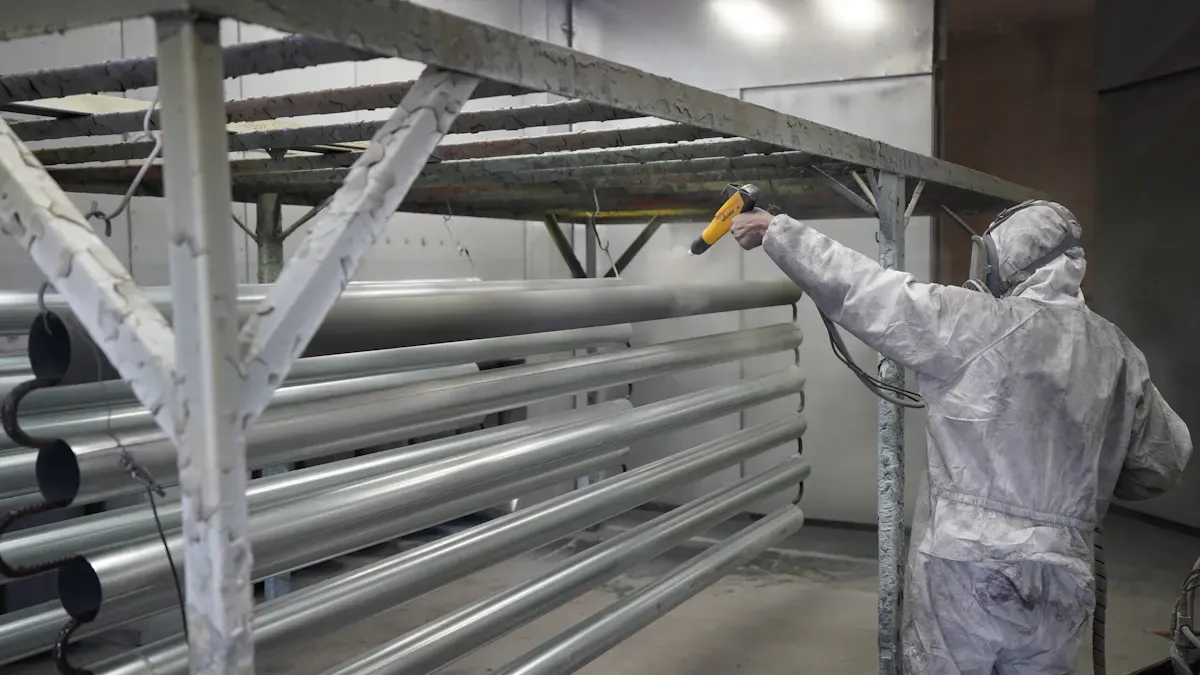
Image Source: pexels
Electrophoretic coating typically offers better abrasion resistance than spray coating. This property is crucial because abrasion resistance determines how well a coating can withstand wear and tear during use. Jinlisheng’s expertise in developing high-quality coatings ensures that their products excel in this area. When choosing a coating, understanding how each type performs in real-world conditions helps you make an informed decision. Our Abrasion Resistance Comparison highlights the strengths of Jinlisheng’s coatings, guiding you toward the best solution for your needs.
Key Takeaways
Electrophoretic coating offers superior abrasion resistance compared to spray coating, making it ideal for protecting surfaces from wear and tear.
Understanding abrasion resistance helps you choose the right coating for your needs, ensuring longer-lasting materials and reduced maintenance costs.
Proper substrate preparation and coating thickness are crucial for maximizing abrasion resistance and ensuring effective adhesion.
Jinlisheng’s coatings, like SMP Coated PPGI and PVDF Coated PPGI, provide reliable performance in harsh environments, extending the lifespan of your projects.
Investing in high-quality coatings can save you money over time by minimizing repairs and replacements, enhancing the durability of your equipment.
Abrasion Resistance Comparison: Key Concepts
What Is Abrasion Resistance
You need to understand abrasion resistance before you compare coatings. Abrasion resistance means a surface can withstand wear from friction or rubbing. In the context of coated sheet materials, this property shows how well a coating protects the underlying metal from scratches and damage. Many factors affect abrasion resistance, such as the type of polymer, the surface finish, and the hardness of the material.
When you look at abrasion resistance comparison, you see that different coatings perform differently under stress. For example, e-coating often provides a more uniform and durable layer. This method uses an electric current to deposit paint particles evenly across the surface. You can measure abrasion resistance using several standard tests, including:
GB/T 1770-2008: Measures abrasion of coatings and putty films.
GB/T 1768-2006: Uses a rotating rubber wheel to test wear.
ISO 7784-2:2016: Rotating method for paints and varnishes.
ASTM D3389: Rotary Platform Abrader for coated fabrics.
ASTM D1044: Taber Abraser for plastics.
These tests help you compare the performance of e-coating and spray coating in a scientific way. When you focus on abrasion resistance comparison, you get a clear picture of which method offers better protection.
Why Abrasion Resistance Matters
Abrasion resistance plays a key role in the durability of coated sheet materials. When you choose a coating for industrial use, you want to make sure it can handle daily wear and tear. If you select a coating with high abrasion resistance, you reduce the risk of scratches, cuts, and surface damage. This means your equipment or building materials last longer and perform better.
You can see the impact of abrasion resistance comparison in real-world results:
Tribological wear tests show that coatings with higher abrasion resistance last longer.
Scratches can cause a drop in electrical resistance, which signals wear and possible failure.
The structure of the coating, especially with e-coating, improves durability and reliability.
Enhanced durability and longevity protect your components from wear.
You minimize downtime and maintenance costs.
You increase the safety and reliability of your equipment.
When you invest in abrasion-resistant coatings like e-coating, you save money over time. You extend the lifespan of your materials and reduce the need for repairs or replacements. Abrasion resistance comparison helps you make the best choice for your industry needs.
Electrophoretic Coating Overview
Process and Benefits
You can achieve a highly durable finish with e-coating. The process, also known as electrophoretic deposition, uses an electric current to deposit paint particles onto a metal surface. This method creates a uniform layer that covers even hard-to-reach areas. You start with surface preparation, which cleans and treats the metal. Next, you apply the e-coating through an electrical process. Finally, you cure the coating by baking it. This sequence ensures a strong bond and a smooth finish.
Here is a table that shows the main process parameters for e-coating:
Parameter Category | Parameters | Description |
|---|---|---|
Suspension | Particle Concentration | Amount of coating material in the suspension |
Liquid Medium | Type of solvent used (aqueous or organic) | |
pH | Acidity or basicity of the suspension | |
Temperature | Operating temperature during deposition | |
Viscosity | Thickness of the suspension fluid | |
Zeta Potential | Stability of the suspension | |
Dispersant Content | Amount of dispersant used | |
Technical | Voltage | Electrical potential applied during deposition |
Deposition Time | Duration of the coating process | |
Electrode Distance | Space between the electrodes | |
Drying Methods | Techniques used to cure the coating |
You benefit from e-coating in several ways:
You get a uniform and consistent coating thickness, even on complex shapes.
You help the environment because e-coating uses mild aqueous or alcoholic suspensions.
You can control the microstructure of the coating, which reduces defects like gas bubbles.
You achieve superior corrosion resistance, which protects your materials for a long time.
You can use e-coating on many substrates, including metals for biomedical and industrial uses.
Film thickness depends on voltage and time. You can reach an optimal thickness of about 20 micrometers. This thickness gives you excellent abrasion and corrosion resistance.
Typical Applications
You find e-coating in many industries. The automotive sector uses e-coating for vehicle bodies, engines, and important parts. You also see e-coating in appliances and industrial equipment. The demand for high-quality, durable, and environmentally friendly coatings drives its use in electric vehicles and other advanced fields.
You can use e-coating for:
Car bodies and frames
Home appliances like refrigerators and washing machines
Industrial machinery and tools
Medical devices that require a clean, protective finish
E-coating, also called electrocoating or e-coating, gives you reliable performance and long-lasting protection in these applications.
Spray Coating Overview
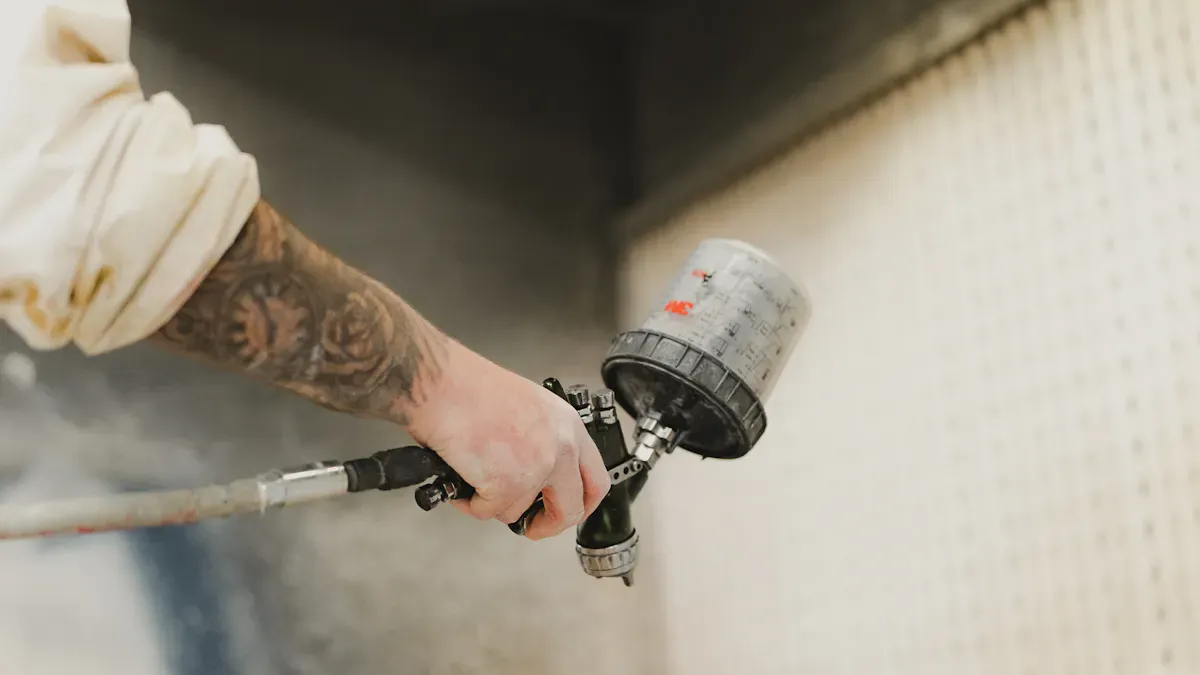
Image Source: pexels
Process and Benefits
You use spray coating to protect surfaces and improve their appearance. The process starts with pretreatment, which cleans and prepares the material. You then apply electrodeposition for anti-corrosion. Sealers and primers follow, creating a strong foundation. Finally, you add topcoats, including basecoat and clearcoat, to finish the job.
Step Number | Step Description |
|---|---|
1 | Pretreatment |
2 | Electrodeposition for anti-corrosion |
3 | Application of sealers |
4 | Application of primers |
5 | Application of topcoats (basecoat and clearcoat) |
You gain several benefits from spray coating:
Reduces downtime
Saves money on new equipment purchases
Decreases labor costs for repairs
You also see improvements in durability and appearance. Environmental compliance increases as you use more sustainable techniques like powder coatings and water-based primers. Recent innovations include smart coatings with self-healing properties. You notice a shift toward powder technology, which uses less solvent and produces fewer emissions. Powder coatings provide a thick, even layer that resists abrasion and corrosion. You can apply powder to metals, plastics, and other materials. Powder sticks to the surface using electrostatic charge, then cures in an oven. You achieve a smooth, durable finish that lasts for years.
Tip: Powder coatings offer excellent protection and help you meet environmental standards.
Common Uses
You find spray coating in many industries. Industrial applications dominate the market, covering manufacturing, chemical processing, and food and beverage equipment. Automotive uses include OEM and aftermarket parts. Aerospace relies on spray coating for high-value components like gas turbine engines. Construction uses spray coating for industrial flooring and protective structures. Other sectors include marine, medical, electronics, and energy.
Industrial: About 34.6% of global revenue
Automotive: Around 26.4%
Aerospace: Nearly 17.3%
Construction: About 13.5%
Others: Roughly 8.2%
You see powder coatings used in each of these fields. Powder technology helps you protect surfaces, reduce maintenance, and improve performance. You choose powder for its versatility and reliability. Powder coatings support sustainable practices and deliver long-lasting results.
Abrasion Resistance Comparison: Performance in Real-World Applications
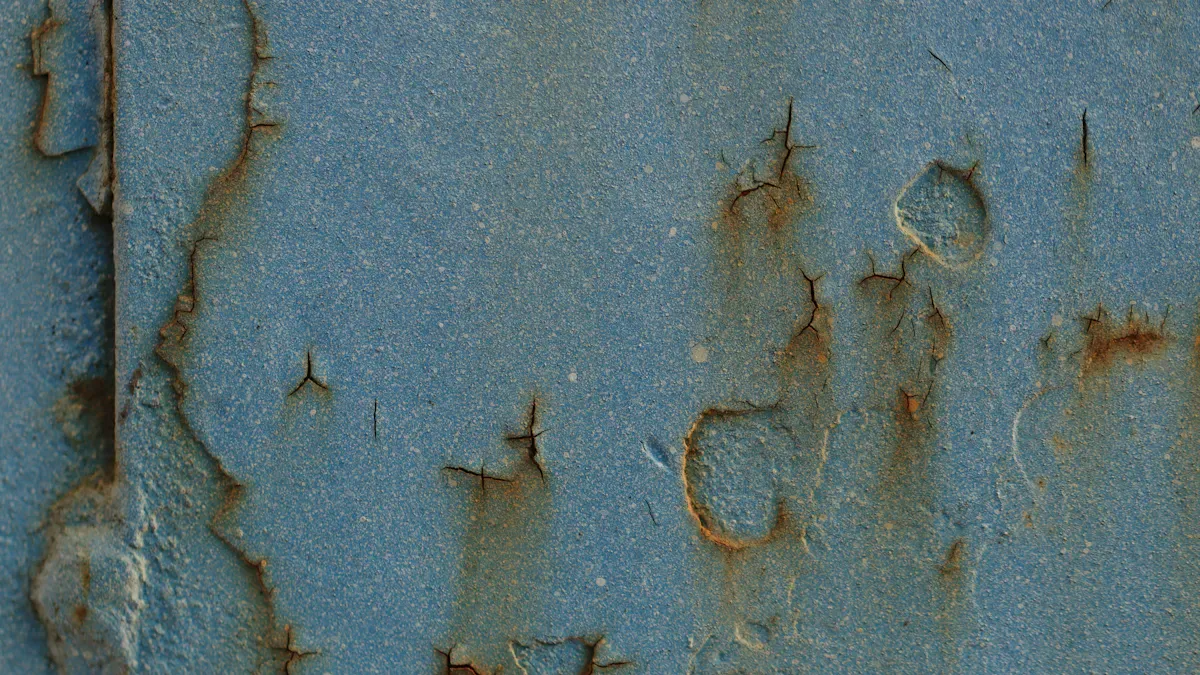
Image Source: pexels
Laboratory Test Results
You can measure abrasion resistance using standardized laboratory tests. These tests help you understand how different coatings perform under controlled conditions. For example, the Taber Abrasion Test uses a rotating abrasive wheel to simulate years of wear in just a few hours. You can see how much material wears away and compare the results for each coating type.
In many tests, electrophoretic coatings show lower weight loss and fewer visible scratches than spray coatings. This means you get better protection for your sheet materials. The uniform layer created by electrophoretic deposition helps resist damage from repeated friction. Spray coatings, especially powder coatings, also perform well but may show more variation in thickness and wear patterns.
Here is a table that summarizes typical laboratory results for common coating types:
Coating Type | Average Weight Loss (mg/1000 cycles) | Visible Scratch Depth | Surface Uniformity |
|---|---|---|---|
Electrophoretic Coating | 5-10 | Shallow | High |
Spray Powder Coating | 8-15 | Moderate | Medium-High |
Liquid Spray Coating | 12-20 | Deeper | Medium |
Note: Lower weight loss and shallower scratches mean higher abrasion resistance.
You can use these results to guide your selection process. If you need maximum protection, you should consider coatings that show the best laboratory performance.
Jinlisheng Product Performance
You see the real value of abrasion resistance comparison when you look at Jinlisheng’s products in action. Each product uses advanced coating technology to deliver outstanding wear resistance and durability in demanding environments.
SMP Coated PPGI: You can use this product for airport warehouse walls, storefront doors, and outdoor billboards. The silicon modified polyester coating provides a tough, flexible surface that resists scratches and scuffs. In field tests, SMP Coated PPGI maintains its color and gloss even after years of exposure to wind, dust, and handling. You get reliable performance for high-traffic areas.
Embossed PPGL: You find this product ideal for interior decoration, furniture surfaces, and cabinet door panels. The embossed texture adds an extra layer of protection. It helps hide minor scratches and keeps surfaces looking new. You benefit from a coating that combines beauty with practical resistance to daily wear.
PE Coated PPGI: You can install this on industrial workshop roofs, house walls, and shutter doors. The polyester coating offers solid resistance to abrasion and weathering. In durability tests, PE Coated PPGI shows minimal wear even after repeated cleaning and contact with tools or equipment.
PVDF Coated PPGI: You choose this for curtain walls, high-rise exteriors, and stadium stands. The polyvinylidene fluoride coating delivers exceptional resistance to UV rays and harsh weather. You see long-lasting color and surface integrity, even in challenging outdoor conditions. PVDF Coated PPGI stands up to both abrasion and environmental stress.
HDP Coated PPGI: You use this for commercial building roofs, hotel ceilings, and hospital corridor walls. The high-durability polyester coating provides excellent wear resistance. In real-world applications, HDP Coated PPGI resists scratches from cleaning tools and daily contact, keeping surfaces attractive and functional.
You can see the results in both laboratory and field settings. Jinlisheng’s coatings consistently show low wear rates, shallow scratch depths, and strong adhesion. This means you get products that last longer and require less maintenance. You protect your investment and ensure reliable performance in every application.
When you choose Jinlisheng, you select coatings that combine advanced technology with proven real-world results. You get the abrasion resistance you need for your projects.
Factors Affecting Abrasion Resistance
Coating Thickness and Uniformity
You need to pay attention to coating thickness and uniformity when you want to improve abrasion resistance. Thicker coatings usually provide better wear resistance. Uniform coatings help prevent weak spots that can lead to early failure. You can see the relationship between thickness, roughness, and durability in the table below:
Coating Thickness | Wear Resistance | Roughness Characteristics |
|---|---|---|
Thicker Coatings | Better Wear Resistance | Optimal roughness enhances contact area |
Increased Roughness | Can lead to stress concentrations | Excessive roughness reduces durability |
Lower Roughness (Ti200) | May not resist wear effectively | Softer nature of TiO2 affects performance |
You should aim for a coating that is thick enough to protect the surface but not so rough that it creates stress points. Uniformity ensures that every part of the material receives equal protection.
Substrate Preparation
You must prepare the substrate carefully before applying any coating. Good surface condition improves adhesion and increases abrasion resistance. You can use pro-adhesive layers and mechanical or chemical treatments to enhance the bond between the coating and the metal. The table below shows key factors:
Key Factors | Observations |
|---|---|
Surface Condition | The coating connection with the metallic substrate is good, indicating effective adhesion. |
Preparation Methods | Pro-adhesive layers and appropriate mechanical and chemical preparation enhance substrate-coating adhesion. |
Abrasive Wear Tests | The behavior of reinforcement in coatings can significantly influence durability. |
The surface condition, thickness, and dryness of the sample are critical for accurate abrasion resistance test results.
Uneven surfaces or thickness can lead to inaccurate results.
Sample preparation affects abrasion resistance test outcomes.
An uneven surface or inconsistent thickness can compromise test accuracy.
You get the best results when you follow proper preparation steps. This helps the coating last longer and improves corrosion resistance.
Environmental Conditions
You need to consider environmental conditions when you select a coating. Research shows that UV radiation, temperature changes, and humidity can degrade surfaces over time. These factors increase the risk of abrasion and reduce the effectiveness of the coating. Temperature and humidity during testing also affect the hardness and flexibility of paint films. Variations can change how well the coating resists wear.
You should choose coatings designed to withstand environmental stress. This ensures long-term durability and maintains corrosion resistance. By understanding these factors, you can make better decisions and protect your materials from both mechanical and environmental damage.
Pros and Cons for Abrasion Resistance
Electrophoretic Coating Advantages
You gain several important benefits when you choose electrophoretic coating for your projects. This method creates a uniform and durable layer that stands up well to abrasion. You see strong performance in both laboratory tests and real-world use. The table below shows how electrophoretic coating compares to other common options:
Feature | E-Coating | Powder Coating | Galvanization | Epoxy Paint |
|---|---|---|---|---|
Durability | Strong against abrasion | Mid-tier | High | Mid-tier |
You notice that electrophoretic coating offers superior abrasion resistance. This means your materials last longer and require less maintenance. You also benefit from excellent coverage, even on complex shapes. The process helps you achieve consistent thickness, which improves protection. You can rely on this coating for both corrosion and uv protection, making it a smart choice for demanding environments.
Tip: Electrophoretic coating works especially well for parts that face frequent handling or movement. You get a finish that resists scratches and keeps your products looking new.
Spray Coating Advantages
Spray coating gives you flexibility and a wide range of application methods. You can select from different types, such as conventional ceramic, nanoparticle-reinforced, or self-healing coatings. Each type offers unique strengths for abrasion resistance. The table below highlights some options and their typical uses:
Coating Type | Hardness (HV) | Application Areas |
|---|---|---|
Conventional Ceramic Coatings | 800 - 1,000 | General industrial applications |
Nanoparticle-Reinforced Coatings | >2,000 | Ultra-abrasive environments |
Cold Spray Technology Coatings | N/A | Aerospace, defense, electronics |
Self-Healing Coatings | N/A | Transitioning to commercial products |
Digital Application Technologies | N/A | Large structures, improving consistency |
You can tailor spray coating to meet specific needs. For example, nanoparticle-reinforced coatings provide very high hardness for surfaces exposed to extreme wear. You also find that spray coating allows for quick application over large areas. This makes it ideal for industrial floors, machinery, and building exteriors. You get a protective layer that helps extend the life of your equipment and structures.
Note: When you need a fast solution for large or complex surfaces, spray coating offers both speed and versatility.
Choosing the Right Coating: Jinlisheng Recommendations
Application Scenarios
You need to match the right coating to your project for the best results. Jinlisheng offers a wide range of coated sheet materials, each designed for specific uses. If you work in construction, you might choose SMP Coated PPGI for airport warehouse walls or outdoor billboards. This coating gives you strong abrasion resistance and long-lasting color. For interior decoration or furniture, Embossed PPGL provides a textured finish that hides scratches and keeps surfaces looking new. When you need a solution for industrial roofs or shutter doors, PE Coated PPGI stands out for its durability and easy installation.
If your project faces harsh weather or UV exposure, PVDF Coated PPGI is a smart choice. This coating resists fading and damage from sunlight. For commercial buildings, hotel ceilings, or hospital corridors, HDP Coated PPGI offers a balance of strength and appearance. You can also consider a top layer of uv-resistant powder coating for extra protection in outdoor environments.
Tip: Always consider the environment and expected wear when selecting a coating. Jinlisheng’s technical team can help you choose the best option for your needs.
Cost and Longevity
You want a coating that fits your budget and lasts a long time. Electrophoretic coatings give you excellent corrosion resistance, especially for complex parts like electronics or automotive components. These coatings usually have lower initial costs and help you save on operational expenses. Powder coatings, on the other hand, create a thicker, more durable finish that resists chipping and fading. They work well for heavy-duty applications but often require higher upfront investment due to specialized equipment.
Here is a quick comparison:
Coating Type | Initial Cost | Durability | Best Use Cases |
|---|---|---|---|
Electrophoretic | Lower | High | Intricate, corrosion-prone parts |
Powder | Higher | Very High | Heavy-duty, outdoor surfaces |
Jinlisheng focuses on quality, innovation, and customer support. You get expert advice, reliable coatings, and ongoing assistance for your projects. When you choose Jinlisheng, you invest in long-term value and performance.
You now know that electrophoretic coating usually gives you superior abrasion resistance compared to spray coating. For construction, choose SMP Coated PPGI or PVDF Coated PPGI for long-lasting protection. For interiors, Embossed PPGL works well. Always consider your environment and application needs. Jinlisheng’s expertise ensures you get reliable, high-quality coated sheet materials.
Ready to upgrade your project? Explore Jinlisheng’s full product range or contact our team for expert advice.
FAQ
What is the main difference between electrophoretic coating and spray coating?
Electrophoretic coating uses an electric current to deposit paint evenly. Spray coating applies paint with air or powder. You get more uniform coverage and better abrasion resistance with electrophoretic coating.
How do I know which Jinlisheng product is best for my project?
You should consider your application, environment, and durability needs. Jinlisheng’s technical team can help you choose the right coated sheet material for your specific use.
Can Jinlisheng coatings withstand harsh outdoor conditions?
Yes. Products like PVDF Coated PPGI and SMP Coated PPGI offer excellent abrasion and weather resistance. You can use them for outdoor walls, roofs, and billboards.
How long do Jinlisheng’s abrasion-resistant coatings last?
You can expect Jinlisheng coatings to last 10–15 years or more, depending on the product and environment. Regular cleaning and maintenance help extend their lifespan.
Are Jinlisheng’s coatings environmentally friendly?
Yes. Jinlisheng uses advanced, eco-friendly processes and materials. You benefit from coatings that meet international environmental standards and reduce pollution.